
Advertising in Indonesia: A Practical Guide 2026


Indonesia is one of the most attractive advertising markets in Southeast Asia—but it’s also one of the easiest to misunderstand.
On paper, the numbers look amazing: a massive population, high social media usage, fast digital adoption. In practice, many digital marketing campaigns still underperform because brands treat Indonesia like a simplified extension of other APAC markets. It isn’t.
This guide is based on what we see running campaigns in Indonesia year after year—what actually works, where brands usually get it wrong, and how to approach the market with respect and realism in 2026.
A Guide to Advertising in Indonesia 2026 🔽
1. The Indonesian Advertising Landscape: What the Data Doesn’t Fully Explain
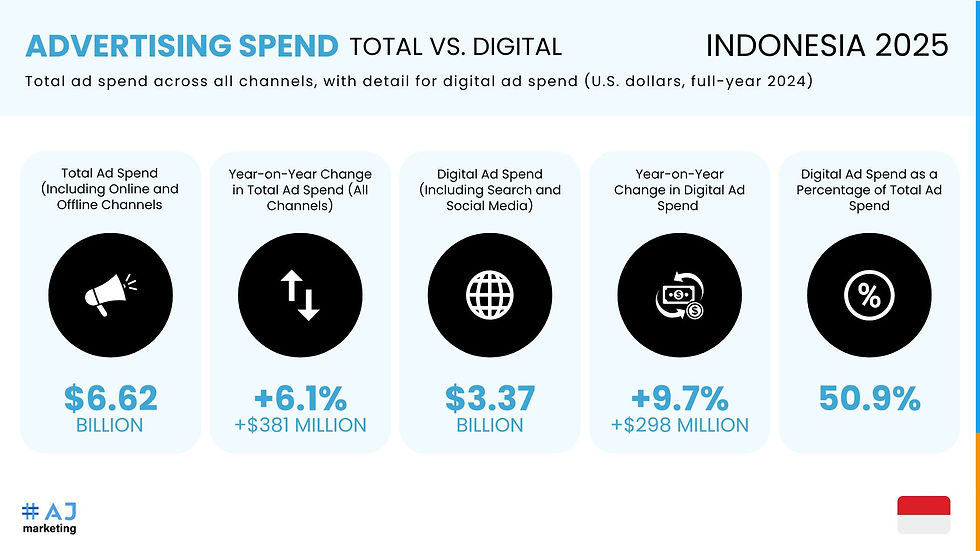
Indonesia’s advertising spend continues to lean heavily toward digital. Search, display, and video take up the biggest share, and social media keeps growing as a performance channel—not just awareness.
But here’s the key insight from real execution:
Digital reach is easy. Digital trust is not.
Yes, platforms like Google, YouTube, Instagram, TikTok, and local media networks offer scale. But scale alone doesn’t convert in Indonesia. Campaigns that rely purely on polished creatives or global messaging often see strong impressions and weak results.
Influencer and creator-led advertising keeps growing for a reason. Not because it’s trendy—but because Indonesian consumers actively use creators to:
Compare options
Understand pricing
See how products fit into real daily life
This is why influencer activity continues to attract serious budgets—not as an add-on, but as a core media layer.
Learning from real campaign
Pepsodent worked with lifestyle creators to produce short, drama-style videos that talk about gum health in a way people actually want to watch. Instead of pushing textbook education, the creators told relatable stories and wrapped the message into entertainment.
Each video included TikTok Shop affiliate links, making it easy for viewers to buy without leaving the app. The strongest-performing videos were then amplified through TikTok Spark Ads, turning organic creator content into scalable performance media.

2. Understanding the Indonesian Audience (Beyond Population Size)
Indonesia has over 285 million people, but treating it as one audience is a common mistake.
What we consistently see:
Urban consumers are highly digital, price-aware, and comparison-driven
Tier-2 and Tier-3 cities are growing fast, but respond better to practical, benefit-led messaging
Rural audiences still matter, especially for FMCG, telco, and mass products—but require different pacing and channels
Urbanization and a growing middle class have changed expectations. Consumers want value, clarity, and relevance. They are not anti-brand—but they are very sensitive to hard selling.
This is why many brands work with top local marketing agencies in Indonesia. Not for translation—but for judgment calls: tone, pacing, and platform mix.
3. Culture and Compliance (Where Campaigns Quietly Fail)
Cultural understanding matters more in Indonesia than most briefs acknowledge.
Indonesia is predominantly Muslim, and cultural sensitivity isn’t optional—it’s assumed. But culture goes beyond religion.
From experience:
Direct messaging often feels aggressive
Subtlety and context matter
Family, community, and social harmony influence decisions more than individual identity
Campaigns that feel pushy, overly sexualized, or culturally tone-deaf tend to stall—even if they pass internal brand checks.
On the compliance side, brands need to be aware of advertising laws covering consumer protection, broadcasting, press, and digital transactions. Most issues don’t come from obvious violations—but from not aligning content format, claims, or disclosures with local expectations.
Good campaigns in Indonesia feel considerate, not clever.
4. What Successful Campaigns Have in Common
Indomie – Hadapi Dengan Indomie Jumbo
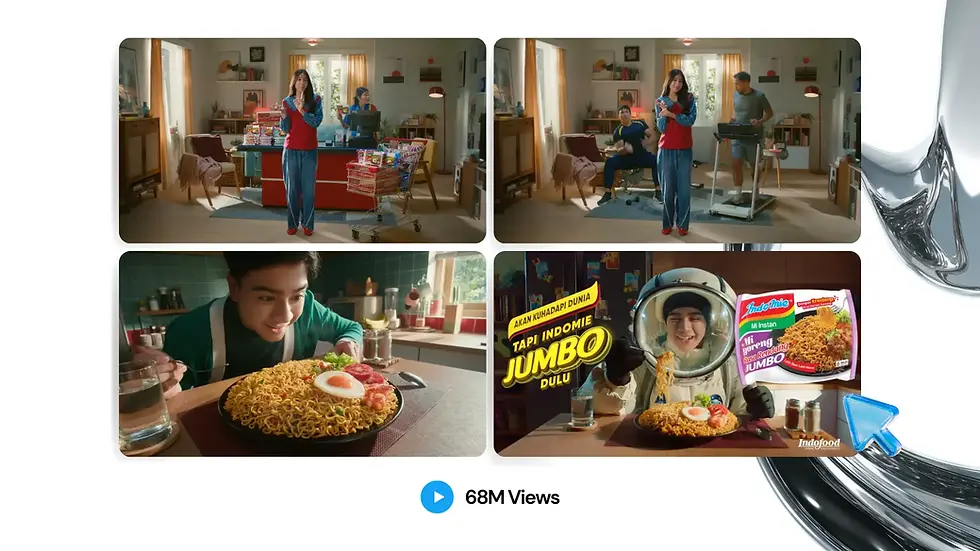
Indomie’s success wasn’t about production value. It was about emotional accuracy.
The campaign leaned into:
Gen Z culture
Daily relevance
Local humour
The TVC taps into the idea of Indomie as the number one comfort food. No matter how busy the day is, there will always be time for a plate of Indomie.
Wonderful Indonesia – “Waiting”

This campaign worked because it respected context.
Instead of pushing travel aggressively, it acknowledged hesitation, safety, and emotion. The pacing was slow. The message was calm. The visuals were restrained.
That tone matched how people actually felt at the time—and that’s why it landed.
The lesson isn’t creativity alone.It’s empathy + timing.
Netflix – “Can This Love Be Translated”

This campaign worked because it taps into Indonesia’s giant K-Drama fanbase.
Instead of pushing a generic global poster, Netflix leaned fully into Indonesia’s local culture.
In the promo visuals, you’ll spot:
A warung — the most familiar everyday shop for Indonesians
A motorbike plate D 4384 K, which cleverly reads as “Daebak”
Characters eating cilok, a beloved local snack
Posing inside a bajaj, an iconic local ride
By placing Korean stars into hyper-local Indonesian contexts, Netflix made the audience feel seen. It turns a foreign series into something familiar.
5. Where Indonesian Advertising Is Headed in 2026
Based on current execution patterns, a few shifts are clear:
Mobile-first is no longer optional
Most discovery, comparison, and purchasing starts on mobile. Desktop-first thinking underperforms.
Personalization needs restraint
Data helps, but over-targeted or overly clever messaging feels intrusive. Simple, useful personalization wins.
Social commerce keeps growing
Platforms aren’t just awareness tools. They’re decision engines.
Creators matter more than formats
Not because of reach—but because of trust. Smaller creators with strong engagement often outperform big names.
Sustainability needs proof, not slogans
Consumers are increasingly skeptical. Vague claims don’t work. Practical action does.
Storytelling is getting quieter
Less hype. More realism. Content that feels lived-in performs better than cinematic ads.
CONCLUSION
Advertising in Indonesia isn’t difficult—but it does require humility.
Brands that win here don’t copy-paste global playbooks. They listen. They test. They adjust. And they respect how Indonesians actually consume content and make decisions.
If you approach Indonesia as a long-term market—rather than a quick scale opportunity—you’ll build campaigns that don’t just look good on reports, but actually move the needle.
That’s the difference we see on the ground.
Frequently Asked Questions (FAQs)
Why does advertising in Indonesia often underperform for international brands?
Most underperformance comes from copying global creatives without adapting to local behavior. Indonesian consumers are highly digital but very sensitive to hard selling. Campaigns work best when they feel practical, relatable, and creator-led—not overly polished or sales-driven.
Is influencer marketing really necessary in Indonesia?
Yes. In Indonesia, influencers are not just for awareness. Consumers actively use creator content to compare products, understand pricing, and see real usage. Brands that skip influencer marketing often struggle to build trust, even with strong media spend.
Which platforms work best for advertising in Indonesia?
There is no single “best” platform.
TikTok and Instagram drive discovery and consideration
YouTube works well for deeper explanation and reviews
Search captures intent once interest is formed
The right mix depends on your category, price point, and how much explanation your product needs.
How important is cultural sensitivity in Indonesian advertising?
Very important. Indonesia is culturally diverse and predominantly Muslim. Messaging that feels too aggressive, insensitive, or disconnected from daily life tends to be rejected quietly—through low engagement and weak conversion rather than public backlash.
What type of content performs best in Indonesia in 2026?
Content that feels:
Honest
Useful
Easy to relate to
Creator-led reviews, comparisons, and everyday usage scenarios consistently outperform high-production brand ads.


