
Influencer Marketing in Korea: Things You Must Know
- Arthur S.

- Jun 2
- 8 min read
Updated: Jun 4

The first time I watched a foreign brand try to launch in Korea, they ran the exact playbook that works everywhere else. A big Instagram name. A polished hero film, dubbed into Korean. A tidy burst of posts timed to launch day. On paper it was flawless. In Korea it barely registered — polite comments, quiet sales, and a team that genuinely couldn’t work out what had gone wrong.
It wasn’t the budget and it wasn’t the talent. The mistake was treating Korea as one more line on the “Asia” slide, when Korea runs almost entirely on its own logic. Different platforms, stricter rules, a sharper audience, and a path to purchase that’s harder to fake than anywhere else I’ve worked.
So here’s what I wish someone had told me before my first campaign here. Almost all of it traces back to a single idea: in Korea, trust is the conversion engine — and trust is built differently than it is in the West. Hold onto that one sentence and the rest of this makes sense.
Influencer Marketing in Korea: Things You Must Know
1. Understand the reign of YouTube and Instagram
In a lot of markets, “social media” is a fragmented map — TikTok over here, X over there, Facebook still hanging on. Korea is much simpler. Two platforms do almost all of the heavy lifting, and they do completely different jobs.
YouTube has quietly turned into Korean television. So many established celebrities and entertainers have opened their own channels that the line between “TV personality” and “creator” has basically dissolved. Variety hosts, retired idols, actors and comedians are all on YouTube now, with shows that look and feel like polished broadcast content because the people making them used to make exactly that. Sitting alongside the celebrity layer is something just as important: deep niche-expert channels covering whatever your category is, in real detail. If you want long, engaged attention, this is where it lives.
Instagram does something else entirely. It’s where products go viral. It’s where a new café, a new sneaker, a new skincare line gets quietly anointed cool. People scrolling Instagram in Korea aren’t there to learn — they’re there to see what’s trending, what looks good, what to want. So if YouTube is where you build credibility through longer storytelling, Instagram is where you set the cultural temperature around your brand.
Take the YouTube channel, DdeunDdeun, for example. This channel is owned by Yoo Jae-suk. The flagship show is Pinggyego (“Just an Excuse”) — 50 minutes of him chatting with friends and guests over coffee, walks, or meals. It became one of the most successful YouTube programs in the country. It won the Best Entertainment Award at the Baeksang Arts Awards in 2025.
2. Why the best Korean ads don’t look like ads
A large part of Korean influencer marketing has quietly slipped into a different shape entirely. Some of the most effective brand work on Korean YouTube today is organic-feeling product placement that simply isn’t labelled. The product shows up inside the story, the logo catches the camera, the host doesn’t pitch it, and viewers — who would have bounced from an obvious ad — keep watching. It sits in a grey zone, and the creators carrying it are taking on real regulatory risk, but for now the trend keeps spreading because it works.
A good example is a Korean couple — a former actress and a home-shopping presenter — who converted an old school bus into a camper and have been slowly traveling Europe in it. In one of their Norway episodes they take a bike ride, and a helmet brand and a bicycle brand appear repeatedly in the shot. They never stop to talk about either one. No feature list, no script, no “thanks to our sponsor.” The logos just live inside the frame of a trip their audience is already loving. By the end of the episode you’ve absorbed both brands without ever feeling marketed to. That’s the new model: don’t sell, just be naturally present inside content people already trust.
3. The rise of the Mega KOLs
If you only have a budget for one type of creator in Korea, you want a Mega KOL. These aren’t standard macro-influencers. They sit somewhere between celebrity and creator, and they pull both crowds at the same time.
The archetype is the former idol who has grown into a personality of her own, the reality-TV regular who became a household name through years of variety shows, or the comedian running one of those wildly popular Korean YouTube entertainment channels. Their posts don’t get the engagement that’s normal for influencers. They pull 100,000 likes a post like it’s nothing. When they put their face on a product, the effect is closer to landing a celebrity endorsement than booking a creator — at a fraction of the production friction.
I’ve watched brands here learn this the hard way. They arrive wanting a neat, tiered creator program — sensible on paper. But once they see what a single well-fit Mega KOL delivers versus a long roster of smaller creators, the budget quietly shifts upward. Korean audiences already treat these figures as more than influencers, and the trust they’ve built up over a long public career compounds in a way short-form follower counts can’t replicate. If a Mega KOL genuinely fits your brand, that one deal is often the centerpiece of a Korean launch, not just a piece of it.
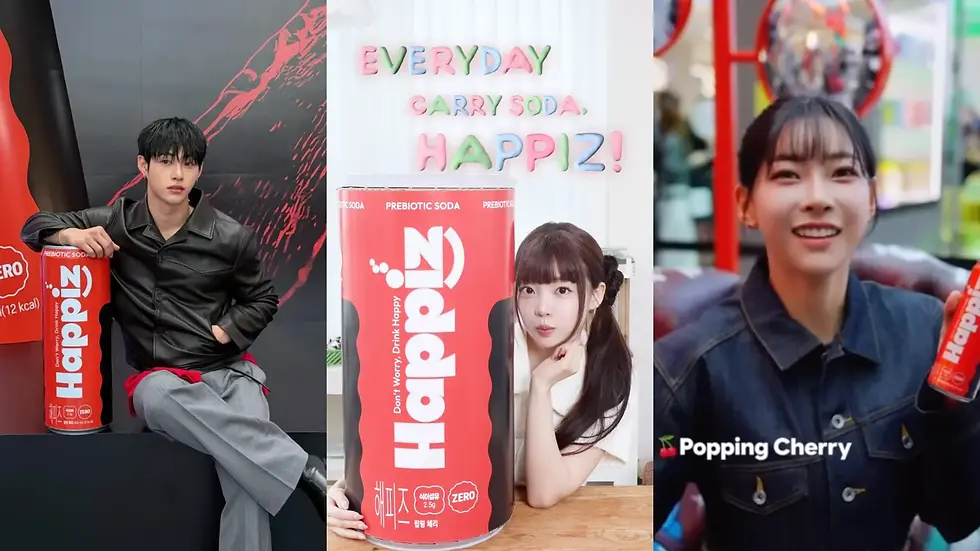
Happiz is a clean example of this done on purpose. They activated mega-influencers to widen the conversation, partnering with Single’s Inferno stars and other influencers to attend the offline event and make the product feel like something real people were genuinely drinking, not just something a star was paid to hold.
4. Fandom is a superpower, and a liability
Korean fan culture is intense and organized in a way that’s hard to appreciate until you’ve seen it up close. When a beloved figure genuinely backs a product, it can sell out overnight. But that power only shows up if you treat the fandom as a community you’re joining, not an audience you’re renting. Get that wrong and the same fans who could carry your launch will quietly decide you don’t belong.
A few things I’ve learned matter more than the size of the deal. Learn the fandom’s own language before you post — they have names, in-jokes, rituals and colors, and using them correctly signals respect while getting them wrong signals that you didn’t bother. Let the artist’s voice lead the content instead of forcing your brand script onto it; fans can smell corporate copy from a mile away, and they trust the idol, not you. Give them something real to rally around — early access, a genuinely exclusive product or design, a behind-the-scenes moment they can’t get anywhere else — because fandoms reward brands that bring them closer to the person they love.
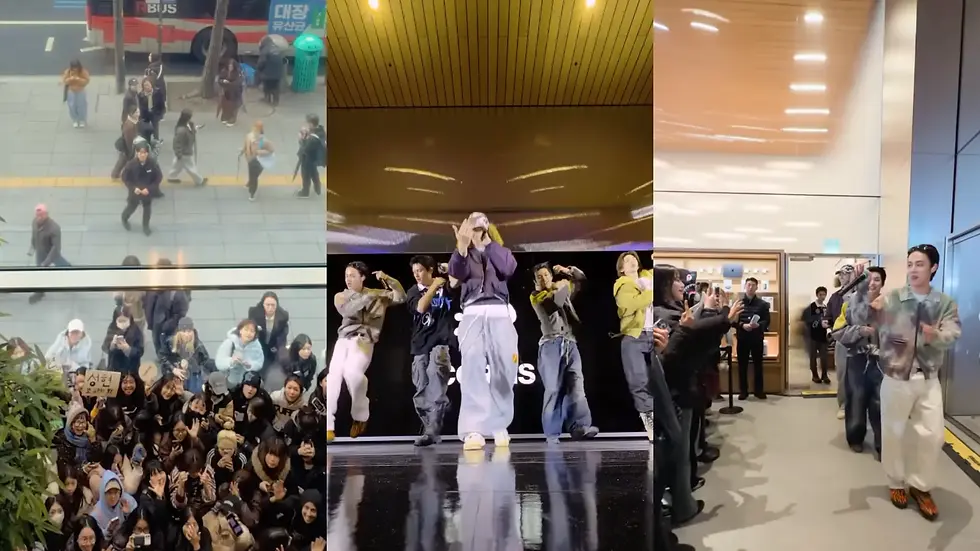
A recent example that stuck with me: to mark Apple’s 50th anniversary, Apple invited the rising group CORTIS to perform at its flagship store in Myeongdong. Notice what they didn’t do — they didn’t just cut another ad. They handed the fandom a real experience, a moment fans could show up to, film and share, with the brand playing host instead of interruption. That’s fandom marketing at its best: you earn your place in the community by giving people something to gather around.
5. You can’t translate your global creative — you have to localize it
Reach isn’t your problem in Korea. Instagram alone has somewhere around 24 million users here, close to half the population. Fit is the problem.
A re-skinned global asset reads as foreign the instant it lands. The tone is a degree off, the humor doesn’t carry, the references belong somewhere else. And in a market where trust is everything, “foreign” quietly translates to “doesn’t understand us.” The brands that win give their Korean creators real room to make the content genuinely Korean — in language and in feel — instead of handing over a script to perform. It’s the difference between a brand speaking to Korea and a brand speaking as part of it.
Adidas Korea is the example I point to most. For its FIFA World Cup push, rather than rolling out the same global film everyone else got, Adidas KR built the “Assemble Korea Team” campaign around the names Koreans actually rally behind — superstar footballer Son Heung-min (“Sonny”), alongside Koo Ja-cheol, Lee Kang-in and Felix.
Same global moment, reframed as a Korean story with Korean heroes. That’s the whole move: take a worldwide phenomenon and make it feel like it belongs to the home crowd, instead of asking the home crowd to care about something clearly built for somewhere else.

CONCLUSION
If you’re starting from scratch, here’s the short version of where I’d put my energy first:
Map where attention sits in your category across YouTube and Instagram — which celebrity channels, which niche-expert channels, which Instagram accounts are setting the trend.
Lead with a Mega KOL if one genuinely fits — a former idol, reality regular or comedian channel with celebrity-grade pull will usually do more in Korea than a wide roster of smaller creators on the same budget.
Brief your creators for natural, in-story product placement — not just declared sponsored posts. The lighter the brand touch, the longer Korean viewers will stay with it.
Move with fandom moments — comebacks, anniversaries, birthdays — and let the artist’s voice carry the content rather than your global script.
Hand your Korean creators real authorial control. Localization here is a creative decision, not a translation task.
None of this is exotic once you’ve done it. But it’s almost the opposite of the global default, and that’s exactly why foreign brands keep getting Korea wrong. The market won’t reward you for showing up loud, and it won’t reward you for assuming what worked at home will work again here. It rewards brands that bother to learn how attention, trust and persuasion actually function in this country — the platforms people live on, the formats they tolerate, the names that genuinely move them — and meet the audience on those terms. Play it properly, and Korea is one of the most rewarding markets there is.
Frequently Asked Questions
What are the most important platforms for influencer marketing in Korea?
YouTube and Instagram do almost all the heavy lifting, and they do completely different jobs. YouTube has become Korea's "TV" — established celebrities, retired idols and niche-expert channels all live there and command long, focused attention. Instagram is where products go viral and get anointed cool. Most strong Korea plans use YouTube for credibility and storytelling, and Instagram to set the cultural temperature around the brand.
Why don't a lot of Korean influencer ads look like ads?
Korean disclosure rules are very strict, and Korean audiences are even stricter — anything tagged #광고 ("ad") gets a measurably colder reception than the same content would almost anywhere else. Over time, a lot of effective influencer work has slipped into organic-feeling, undisclosed product placement woven into normal content. It's a regulatory grey zone for the creators carrying it, but for now it keeps spreading because viewers keep watching.
What is a "Mega KOL" and why do brands prefer them in Korea?
A Mega KOL sits somewhere between an influencer and a celebrity — usually a former idol, reality-TV regular or popular YouTube comedian who pulls around 100,000 likes a post without effort. Korean audiences trust them like public figures because they've been built up over years of public presence, not weeks of follower growth. For a launch, a single well-fit Mega KOL often outperforms a wide roster of smaller creators on the same budget.
How should brands engage with K-pop and celebrity fandoms in Korea?
Treat the fandom as a community you're joining, not an audience you're renting. Learn its language, names and rituals before you post, let the artist's voice carry the content rather than your brand script, and give fans something real to rally around — exclusive products, early access, a behind-the-scenes moment. Move with their calendar too: comebacks, anniversaries and birthdays carry energy you can ride instead of interrupt.
Why doesn't translated global creative work in Korea?
Reach isn't the problem in Korea — fit is. A re-skinned global asset reads as foreign the moment it lands, and in a market where trust is the conversion engine, "foreign" quietly translates to "doesn't understand us." The brands that win give their Korean creators real authorial control to make the content genuinely Korean in language and in feel, rather than handing over a polished script to perform.


