
Top 20 Most Engaging YouTubers in Malaysia (2027)

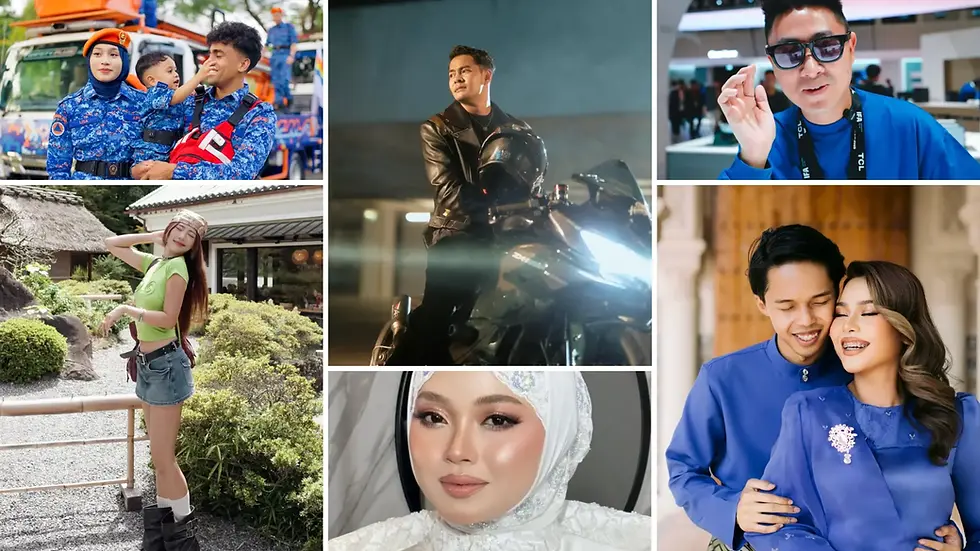
When we published the 2025 version of this list, almost every entry was one person and a camera. Refresh it for 2027 and nine of the twenty are something else: a collective, a registered company, a trio, a media group, a podcast with its own ad network. That shift changes how you brief, how you contract and who answers the email.
The other thing the list makes obvious is language. Roughly half these channels speak Malay, close to half speak Mandarin, and one or two run trilingual. Malaysian audiences do not cross those lines as freely as the subscriber totals suggest, and neither should your media plan. A campaign that buys Alieff Irfan and Ling BigYong is buying two different countries' worth of attention. We covered the same split in our Instagram list and in the social media guide; YouTube is where it matters most, because the watch time is longest.
One more pattern worth naming before the list. For several channels here you will not find a labelled sponsored video, and it is not because nobody has bought them. Deals happen on Instagram and TikTok where labelling is looser, some creators sell their own products instead of other people's, and company-run channels do integrations without a disclosure tag.
Top 20 YouTubers in Malaysia in 2027
1. Alieff Irfan
Subscribers: 6.5M
The most subscribed individual creator in Malaysia built his audience in Kelantanese dialect, which most agencies would have told him to drop. He kept it, and the skits and parodies that followed read as inside jokes to millions of Malaysians. He edits his own VFX, which shows in the production level, and his channel has since widened into family life, animal keeping and group content with the AI Team, the collective he founded. One detail worth knowing before you brief him: his Ramadan short film sat in YouTube Malaysia's top ten trending videos back in 2018, and he has been producing festive storytelling ever since. If you want a Raya or Ramadan anchor on YouTube, this is where the conversation starts. Lesson: regional dialect is reach, not a limit, when the creator is this fluent in it.
He co-owns Bellestrelle with his wife Belle, and Mobile Legends, Genshin Impact and the Waka platform recur in his tagged posts, with fragrance and motorsport work listed by the agencies that book him. The practical read for a brand is that Alieff is bought as an AI Team package, and the YouTube placement comes with the Instagram one.
2. Isa Isarb
Subscribers: 2.5M
His channel tagline is "membawa Malaysia ke mata dunia," taking Malaysia to the world's eyes, and the format are social experiments: strangers, a twist, often a cash reward at the end. Think of it as the Malaysian answer to the big-budget challenge channel, with local manners intact. The recent "Spy vs Orang Biasa" episode shows the mechanic: an ordinary person placed inside a staged scenario, and the audience watching for the reveal. He also carries a 1.1M Instagram audience into the sports category, which makes him a two-platform buy for football and fitness brands. Lesson: challenge formats work in Malaysia when the prize is generosity, not humiliation.
His Tencent Cloud work for the FIFA World Cup 2026 campaign shows how a brand gets into a social-experiment channel without becoming the experiment. The placement sits inside a solo camping vlog, a quieter format than his usual stunts, and the shoutout is tied to what he is doing on screen rather than cut in as a separate segment. For a B2B name like a cloud provider, that is the right shape: borrow the trust of a creator the audience already watches alone in a tent, say the thing once, and leave. The scale matters too. Isarb Media Sdn Bhd runs its own brand partnerships division, so a global campaign lands with a team that has done this before.
3. Faiq Freestyle
Subscribers: 1M
Faiq started as a street football freestyler and has quietly become one of the most watched family vloggers in the country. His August 2026 video announcing his wife's pregnancy after two years of trying pulled the kind of comment section brands pay for: viewers writing in with their own stories, not reactions. The bio still reads "abang yang baik di sini," the good older brother, and that is exactly the role his audience gives him. Trade-off: the football content is now a smaller share of uploads, so sports brands should look at his back catalogue and his Shorts, while family, baby and home brands get the current channel at its strongest.
Given around 17M views a month and the shift to family life, the open lanes are obvious: baby and parenting brands for the current channel, sports and footwear for his Shorts and back catalogue. A brand that moves first here is buying a creator at the exact moment his audience is widening.
4. Changyong (蔡常勇)
Subscribers: 1.1M
A Johor creator who studied in Taiwan and built a Mandarin channel that travels between Malaysia and Taiwan. His CNY music video topped YouTube Malaysia's trending list for 2020, ahead of global channels, which tells you how festive content performs here when it is built with a creator crew. He runs his own brands on the side, so he reads a brief like an operator. The "one day boyfriend" format with his collaborator Kai Hao is a repeatable comedy structure brands can slot into. Lesson: for Mandarin-speaking Malaysia, this is one of the few channels where a lifestyle brand and a tech brand both fit.
The case to look at is his September 2026 Xinjiang episode for Cathay Pacific. It runs as a normal "八點檔" travel vlog, Changyong wandering Kashgar, getting mistaken for a girl, nearly confessing to a pregnant stranger, and the airline sits inside the journey rather than on top of it. 280K views in under a month, and the comments are about the trip, not the ad. That is what a travel sponsor should want from him. The channel has 33 tracked brand deals across 18 brands, with Ulike, Dreame and Insta360 as repeat sponsors, so he knows how to hold a product in frame without stopping the story.
5. AI AisyahRudy
Subscribers: 506K
Aisyah is one of the faces of the AI Team collective, with her own channel sitting beside the group account. Her bio is three words, "kindness number one," and the content is light, personal and built for the audience that already follows the team's group videos. For brands, she is the entry point into the AI Team universe at a lower commitment than the founder's channel, with the same audience overlap.
No standalone brand work was found on her channel, which is consistent with how the AI Team sells: deals land at the collective and get distributed across members. For a brand, that means Aisyah is reachable through the same door as Alieff, at a lower entry point, and her role in a group campaign is the female-skewing slice of the same audience.
6. 3P
Subscribers: 590K
Danny Lee, Kevin Ong and Caven Tang are a hip hop dance trio who write and release their own tracks, and the music videos are the growth engine. Their single "Hu Else" cleared a million views in four days in 2022, and by December 2023 they were headlining their own dance show at Resorts World Genting's Arena of Stars, with a fan signing at Sungei Wang Plaza to sell it. That is a creator group that has crossed into ticketed entertainment. For brands, the opportunity is choreography: a product placed inside a dance video gets screen time that an endorsement line never does.
The "Horkasai" music video is the example to study. Brice products are placed inside the video itself, not in a pre-roll or a caption, which means the brand lives wherever the song lives: in Shorts, in dance covers, in the clips fans cut themselves. That is the value of a group that writes and choreographs its own tracks. A placement in a sketch is seen once; a placement in a music video gets replayed with the chorus.
7. Ling BigYong (林BIG咏)
Subscribers: 1.6M
A channel that has been running since 2009 and is still finding new formats. He built his name on "different types of" skits, the swimmer, the sleeper, the student, and the Mandarin-speaking audience in Malaysia, Singapore and Taiwan grew up with them. In July 2026 he spent a week commuting across the Causeway as a Malaysian worker in Singapore and filmed the whole thing. That is the current direction: fewer sketches, more social experiment. His Instagram sits near 485K with engagement well above the Malaysian median, so a YouTube integration here comes with a working second screen. Lesson: a sixteen-year channel that still changes format is a safer long-term partner than a fast riser on one trick.
His Wise collaboration is the template for how a social experiment carries a brand. The premise was a question every Malaysian who crosses the Causeway has asked: what if one Singapore dollar were worth one ringgit? He spent a day in Singapore pricing hawker food, transport and groceries on that assumption, and the remittance app arrived as the answer to the problem the video had just made the audience feel. 826K views. A brand with a product that solves a cross-border headache, in finance, telco or travel, gets more from this format than from a standard integration, because the experiment does the explaining. One caveat: this ran in August 2025, and his 2026 uploads carry no visible sponsor, so he is selective.
8. AI Team
Subscribers: 884K
This is the collective's own channel, and it is the fingerprint of this list. Four of the twenty channels here belong to one group: the founder, this account, and two members. That is not a coincidence. The AI Team operates like a small production house with an audience that moves between channels, and the members' contact details route through a shared marketing address. Brief it as a network, not a creator: one campaign can run across the group channel and two or three member channels with the same crew, the same editing style and a shared audience that sees the story from different angles.
The collective's own channel carries no disclosed sponsor in this review, and I do not think that is the whole story. Members' contact details route through a shared marketing address, Alieff's August 2026 upload references a team partnership segment, and the group produces festive music videos that any brand would want to sit inside. Treat the AI Team as a single commercial counterparty with four channels, and ask for the group rate.
9. Seramkita
Subscribers: 413K
Horror told through chat screens. Seramkita's format is a text conversation unfolding on screen, a Malaysian ghost story read one message at a time, around eleven minutes per episode. The production cost is low and the retention is high, which is the whole point. It posts around one to two videos a week and pulls millions of views a month on that cadence. For brands, the fit is telco, mobile apps and anything that already lives inside a phone screen, because the product can appear in the story without breaking the format. Trade-off: this is a faceless channel, so there is no creator personality to borrow. You are buying the format and the audience, which for the right category is better.
A telco or a mobile app could own this format outright in Malaysia for less than one mid-tier creator post, and the integration writes itself: the product is already on the screen where the story happens.
10. AI Kekanda
Subscribers:884K
Another AI Team member channel. Kekanda means older brother in classical Malay, and the persona is the group's big-brother figure, tagged "#keningboy" and "#hajimaru" in the bio. He belongs here as the third door into the collective's audience, and for a brand running a multi-channel AI Team campaign, he is the one who reaches the male segment of that audience most directly.
Same pattern as the other member channels: no separate brand deal found, reach sold as part of the group. His value in a package is the male segment of the AI Team audience, and a brand running a four-channel story with the collective would use him as the big-brother point of view.
11. AI Rina (Siti Hazarina)
Subscribers: 507K
The fourth AI Team channel on this list, and the one whose bio tells you the most about how the group does business. Her collaboration email sits on an aiteammarketing.com domain. That means the collective has an in-house commercial arm, and when you reach out to one member you are likely talking to the team's deal desk. Treat her as the female-led entry into the group's audience, with the same production support as the others.
Her Innisfree brand trip to Korea is the clearest case in the AI Team cluster. The brand flew her out, and she documented the whole trip as a travel vlog, so the product arrives as part of a journey the audience wanted to watch anyway. For a K-beauty brand targeting Malay-speaking women, a vlog from Korea does two jobs at once: it sells the origin story and it sells the product, with the creator's own excitement as the proof. It also shows how a member channel inside a collective gets used: the trip is hers, the audience is shared across the team.
12. Sembang Ohh Yeahh
Subscribers: 200K+
A Malay-language podcast that calls itself the rawest in Malaysia, founded by Iskandar Rahman and co-created with Afiq, and it passed 200,000 subscribers within seven months of launch. Guests tell stories they would not tell on television, and the channel's bio credits UNDERADS, an ad network, which means sponsorship slots are already structured. Podcast integrations in Malaysia are still underpriced relative to their listening time, and a sixty-minute episode gives a brand a spoken mention that lands differently from a thumbnail. Lesson: if your product needs explaining, a podcast host does it better than a sketch.
The ClippersFarm tie-in is the case, and it is a smart match. ClippersFarm is a clipping platform: brands post a brief and a budget, clippers cut the content and get paid per thousand verified views. The sponsor sits on the second Uncle Alam episode, the one where Iskandar's guest goes deeper into his years in the underworld and in prison, which is exactly the kind of long, raw interview that gets cut into dozens of Shorts by other people. So the brand is pitching the audience most likely to clip the episode they are watching, inside that episode. The placement is a description-level integration with a sign-up link rather than a scripted host read, which keeps the conversation untouched. Trade-off: the subject matter is heavy, and a consumer brand would want a lighter episode. For a creator-economy or digital product, a channel whose audience already clips and reposts is the right room to be in.
13. K佬
Subscribers: 284K
An Ipoh-based Chinese creator whose bio reads simply "from Ipoh, Perak, Malaysia." Most Mandarin-language Malaysian channels come out of the Klang Valley or Johor, so a Perak voice is rarer than it should be, and his Tesla vlog shows why that matters. An EV brand working with a creator outside the capital reaches the buyers it actually needs next, the ones in second cities deciding whether charging infrastructure and range are good enough for them. The vlog format carries the car through an ordinary day rather than a spec sheet, which is how most people decide anyway.
14. Mr Money TV
Subscribers: 324K
Peter Yong left a career selling insurance in late 2018 to make personal finance videos for ordinary Malaysians, and the channel now sits under a media group he runs. His channel keywords run in three languages: investing, 投资, pelaburan. That trilingual reach is the real asset. He also co-hosts "Are We OK?", a policy and economy podcast, which keeps his authority current.
The numbers on his sponsorship history are the whole case. 107 tracked sponsored videos across 30 brands, and Moomoo alone accounts for 25 of them. His August 2026 video on how to make money from the memory chip shortage is a typical Moomoo integration: a topical investing explainer, the platform introduced where a viewer would naturally go to act on it, no separate ad segment. A brokerage does not buy 25 videos from a creator whose audience does not open accounts. Non-finance brands have noticed too. Volvo Car Malaysia sponsored his July 2026 interview with Tim Tiah, which tells you the podcast format now sells to lifestyle advertisers as well as fintech. Lesson: when a finance creator has one brand coming back twenty-five times, the audience is the asset, not the subscriber count.
15. Jovane PJY
Subscribers: 441K
Her bio says "ordinary girl who loves acting, baking, fitness and sharing," and that mix is the channel: lifestyle content with three natural brand lanes. Baking opens kitchen and grocery brands, fitness opens activewear and supplements, acting means she is comfortable on camera in a scripted integration.
No brand work surfaced on the channel in this review. The content itself names the categories: baking opens kitchen and grocery, fitness opens activewear and supplements, and the acting background means she can carry a scripted integration without it looking scripted. A smaller channel with three clean lanes is often the better buy for a brand that wants to test before it scales.
16. Lim Reviews
Subscribers: 323K
The Malay-language phone reviewer. Lim posts around three videos a week, short ones at five to six minutes, and the catalogue leans Android: Xiaomi, Redmi, Poco, Vivo, Oppo, Realme, Honor, Huawei, with iPhone coverage alongside. The channel has been running since 2011, and his TikTok audience is now roughly the same size as his YouTube one, so a launch review can be cut for both. His tagline "jom borak tech," let's chat tech, is the register: friendly, fast, no jargon. For a smartphone brand launching in Malaysia, he is the mid-market voice that mass buyers actually watch before purchase. Trade-off: engagement per video is modest relative to views, which is normal for review content; the metric that matters here is search traffic on the device name.
Xiaomi invited him to IFA 2026, and the video he brought back covers new phones, chipsets and AI features in the same plain Malay he uses for a budget phone review. That invitation is the case. A brand does not fly a reviewer to a trade show to get a single video; it does it so that the next six months of launches in Malaysia come with a face the mass market already trusts. For a phone brand, the IFA trip is the top of a funnel that ends in his three-a-week review cadence.
17. Play频道伟鸿 (Wei Hong)
Subscribers: 400K
Wei Hong describes himself as an ordinary Malaysian fat guy who films whatever seems fun, hence "Play channel." The self-deprecation is the charm, and the Mandarin-speaking audience responds to it as one of their own rather than a polished personality. His closing line in the bio, "I'm not the best, but I'm surpassing myself," is the kind of thing fans quote back. For brands, he is a relatable everyman slot in a Chinese-Malaysian media plan, useful for food, gaming and everyday products where a glossy creator would feel wrong.
His Surfshark VPN integration is the kind of deal that shows what the channel is worth to a digital brand. VPN sponsors are precise buyers; they pay for an audience that watches long-form content on a laptop and acts on a promo code. Landing one as a self-described ordinary Malaysian fat guy says the audience is loyal enough to convert, and the format is loose enough to fit a thirty-second read without breaking the mood. Surfshark has now bought two Mandarin-speaking Malaysian creators on this list, him and Dumpling Soda, which tells you the category has done its homework on who converts.
18. Musang King Channel
Subscribers: 309K
This one is a registered company, Musang King Channel Sdn Bhd, which already tells you how it operates. The bio reads "the taste and warmth that belong to Malaysians," and the output is Chinese-language entertainment built around food, challenges and the personalities of its two leads, Bernard and Genie, with "be kind" and "be real" as the house hashtags. Over 840 uploads and a steady 90M views across them is a production schedule, not a hobby. For a brand, a company channel means invoices, a producer on the other end of the email and an understanding of deliverables and usage rights that solo creators sometimes lack. Trade-off: a team channel sells its format and its hosts, not a single face, so a brand looking for one ambassador should look elsewhere on this list. A brand that wants a repeatable branded series gets a partner that already knows how to run one.
The Versa Malaysia podcast episode shows what a company channel can sell that a solo creator cannot. A fintech brand got a full episode slot, not a thirty-second read, with the hosts carrying the conversation about saving and investing in the channel's own warm, everyday register. For a category where the product needs explaining and trust is the whole sale, a podcast episode from a registered production company gives a brand runtime and a contract in the same deal.
19. Dumpling Soda (Lizz Chloe, 彤彤)
Subscribers: 1M
Tongtong is a Cheras-born radio host turned YouTuber, and her channel has moved with her. The bio now says she likes two things: interviewing people and being a "travel frog," a nod to the mobile game where the frog wanders off and sends postcards home. That is the current channel in one line, interviews and travel vlogs delivered with a broadcaster's timing. Her commercial work runs through Creator Studio, a talent management company she co-founded, so the brief goes to a manager rather than a DM. Among Mandarin-speaking Malaysian creators she is one of the few with a radio background, which shows in how cleanly a sponsored segment sits inside her conversation. Lesson: for travel and tourism boards, an interviewer who can carry a conversation with a local host is worth more than a creator who only films the view.
Her Surfshark VPN integration ran inside an LA travel vlog, which is the natural home for it: a Malaysian abroad on hotel Wi-Fi, trying to watch what she watches at home. The product solves a problem the vlog has already shown, and her radio training means the read sounds like a tip from a friend, not a script. For a global digital brand buying Mandarin-speaking Malaysia, this is the format: travel, a real moment of need, then the answer.
20. May Ho (美好)
Subscribers: 190K+
Her name means "beautiful and good," and she opens every video wishing viewers a beautiful day. The channel is unboxing, product sharing and travel, with Penang as the home base and Japan, Korea, Shanghai, Bangkok and Hong Kong as recurring trips. Her partner Allen appears often enough to be tagged in the channel keywords, so couple content is part of the mix. This is a classic Chinese-Malaysian lifestyle channel built for 好物分享, good-thing sharing, where a product review arrives as a recommendation from a friend.
Her 3COINS collaboration is the fit in action. The Japanese 300-yen lifestyle store appears inside a travel vlog, exactly where her audience expects her to be, pointing out good things to buy. That is 好物分享 with a brand attached, and it works because the store already looks like something she would have filmed anyway. For retail brands with a physical presence in Japan or Korea targeting Mandarin-speaking Malaysian women, this is the model: let the creator shop, and pay for the trip.
Conclusion
If I had to bet on what the 2028 version of this list looks like, it is more of the same direction: fewer solo channels, more crews with a commercial desk. That is good news for brands, because it means the people on the other side of the deal increasingly speak your language on deliverables, usage rights and timelines. It also raises the bar. A collective can place your product in four videos across four channels in a week, which is wonderful if the story holds and expensive if it does not.
So brief for the structure you are buying. For a collective like the AI Team, write the campaign as one narrative with four points of view, not four separate posts. For a company channel like Musang King, ask for a series, not a video. For a podcast like Sembang Ohh Yeahh, give the host the one thing about your product that needs explaining and let the conversation do the rest. And for the solo creators who remain, Faiq, Lim, May Ho, K佬, the old rule still applies: pay for their process, not for your script.
One last thing. Three of the biggest channels on this list, Alieff Irfan, Changyong and Ling BigYong, made their best work for Raya and Chinese New Year. If your 2027 Malaysia plan does not already have a festive video on YouTube, this list is where to start the shortlist.
Frequently Asked Questions (FAQs)
Who is the most subscribed YouTuber in Malaysia in 2027?
Among individual creators it is still Alieff Irfan, at around 6.5M subscribers. Corporate channels such as broadcasters and animation studios are larger but are not creators in the sense a brand would book. The more useful question for a campaign is who is the most subscribed in your language and category, because Malay and Mandarin audiences on YouTube barely overlap.
Why are four AI Team channels on one list?
Because that is how the collective sells. Alieff Irfan, the AI Team group channel and two member channels share a crew, an editing style and a marketing address. A brand can run one story across four channels with one counterparty. Treating them as four separate creators misreads how the deals work.
Which Malaysian YouTubers have verified brand partnerships?
Thirteen on this list have a specific video we could point to: Mr Money TV with Moomoo, Changyong with Cathay Pacific, Ling BigYong with Wise, Isa Isarb with Tencent Cloud, 3P with Brice, AI Rina with Innisfree, K佬 with Tesla, Lim Reviews with Xiaomi, Play频道伟鸿 and Dumpling Soda with Surfshark, Musang King Channel with Versa Malaysia, Sembang Ohh Yeahh with ClippersFarm, and May Ho with 3COINS. The others have confirmed affiliations or clear category fit, and we say which is which.
Should a brand pick Malay or Mandarin YouTube creators in Malaysia?
Both, but not in the same brief. Malay-language channels on this list reach the national mass market and are strongest around Raya. Mandarin channels reach Chinese Malaysians and often Singapore and Taiwan as well, and peak around Chinese New Year. Budget by language, not by total subscriber count.
How do you brief a company-run YouTube channel in Malaysia?
Ask for a series or an episode, not a single integration. Channels like Musang King Channel and Mr Money TV are built to produce repeat formats, invoice properly and handle usage rights. The trade-off is that you are buying a format and its hosts rather than one ambassador face.

