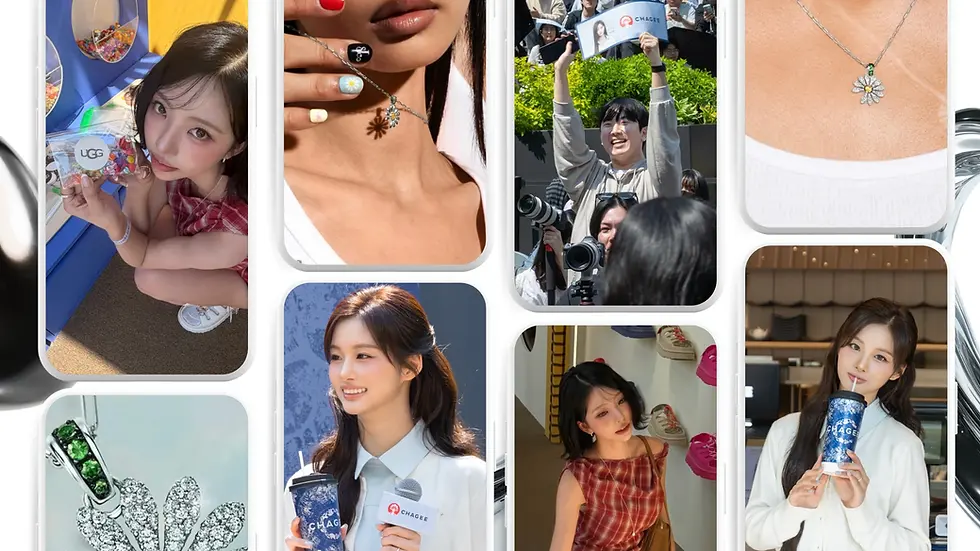
Top 11 Luxury Influencers in Korea in 2026

If you watched what actually went viral in Korean luxury this year, very little of it looked like a traditional campaign. The moments that travelled were events and gestures: Jacquemus throwing a party at Museum SAN in Wonju with the designer himself in the room, Louis Vuitton letting Korea launch J-Hope's sneaker weeks before the rest of the world, ambassadors posting carousels where the campaign shot sits in slide one and their unfiltered day fills the rest. Korean audiences in 2026 reward luxury content that feels lived-in — quiet styling over logos, discovery over announcement, and a person you'd follow anyway who happens to be holding the bag.
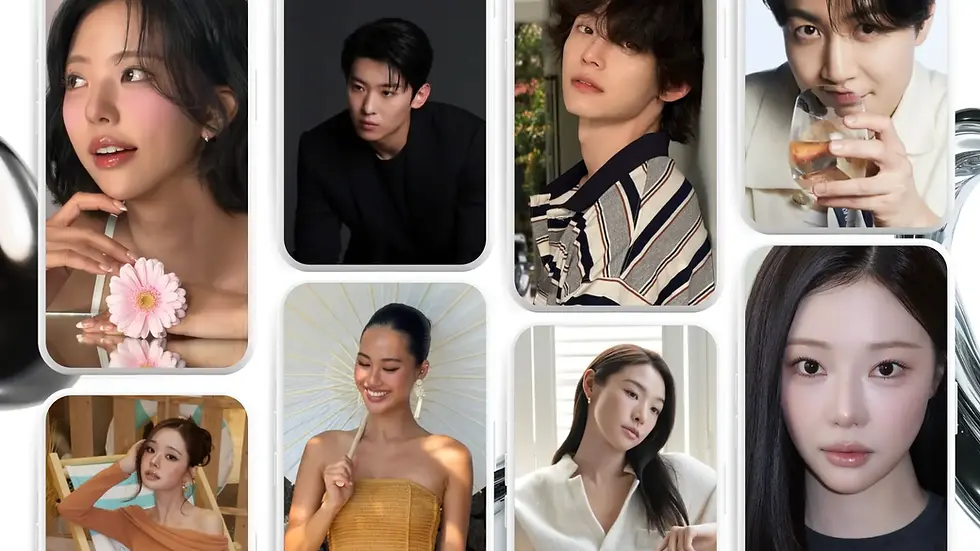
That last point is why this list exists. The idols get the headlines, but a lot of the day-to-day luxury conversation in Korea runs through influencers — reality stars, creators, a chef, a producer — whose feeds are where aspiration actually lives. I've pulled together the eleven I'd shortlist first for a luxury brief right now, counting up. For each one, I've included a recent campaign worth studying, and I've tried to say what they teach rather than just describe the feed.
11 Luxury Influencers in Korea
11. Kim Jeong-su
Followers: 230K

Kim Jeong-su came out of Single's Inferno Season 4. His feed is sparse — around fifty posts — which in luxury terms reads as restraint rather than inactivity. Every image carries weight because there are so few of them.
Dior Beauty clearly saw the same thing. His Dior Sauvage content — a video-and-carousel combination, linked above — pulled 13.8K views on an account this size, with comments centred on how good the visuals looked. Sauvage is a fragrance that trades on quiet, cinematic masculinity, and a sparse, considered feed is exactly the right room to put it in. A busy meme account with ten times the following would have flattened it.
Reality-show alumni at this size are the most underpriced inventory in the Korean market. The fandom is fresh, international (Single's Inferno travels remarkably well on Netflix), and dense in a way a two-million-follower lifestyle account can't match.
10. Mina Sue Choi
Followers: 587K

Mina Sue Choi won Miss Earth 2022, appeared on Single's Inferno Season 5 in early 2026, and has fronted work like Kia and Bloomberg's Designing Tomorrow series. Born in Australia, educated in the US, based in Seoul — she moves between English and Korean audiences without either feeling like a translation.
The campaign I'd study is her SK-II work. She posted behind-the-scenes carousels from a branded shoot built around the theme of Timeless Beauty — filmed with her mother. It took 30K likes, and the comments were about the two of them together, praising her and her mother's beauty in the same breath. That's a campaign structure doing something clever: 'timeless' is an abstract claim until you put two generations of the same face in one frame, and then it's just visibly true.
Her Miss Earth year also made her a spokesperson for environmental causes, and that thread still runs through her partnerships. For luxury brands under pressure to say something about values without greenwashing, a face who carries the credential natively is worth more than a campaign line ever will be.
9. Son Jong-won
Followers: 609K
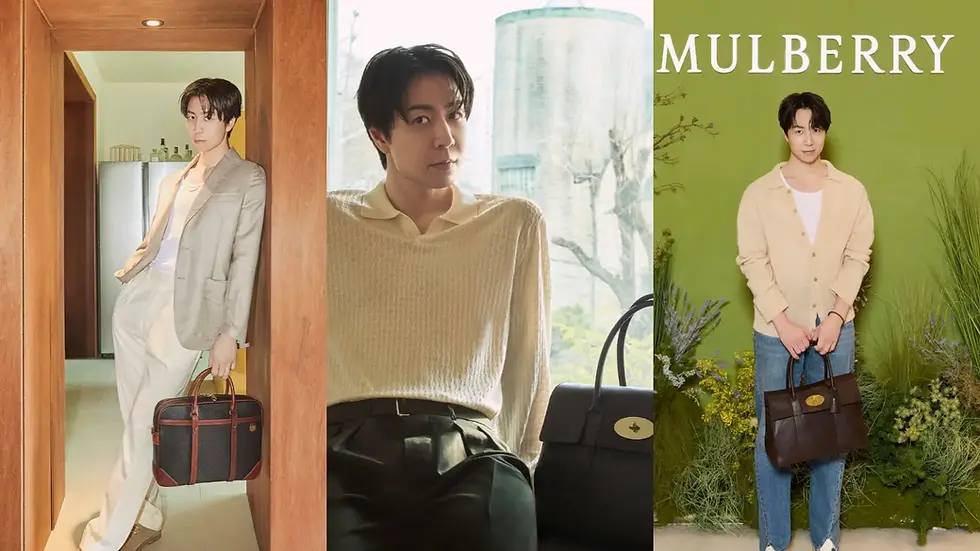
A chef on a luxury influencer list might look like a category error. It isn't. Son Jong-won runs L'Amant Secret and Eatanic Garden — he's the only chef in Korea holding Michelin stars in two different categories at once — and after Culinary Class Wars Season 2, his following jumped from food-industry insiders to the general public. Korean media even coined a nickname for his understated appeal.
Mulberry tested exactly this crossover, inviting him to cover their pop-up event in an image carousel that took 45K likes — and the coverage was also picked up by Elle Magazine. Look at what the house bought there: not a fashion face, but a man whose entire public identity is craftsmanship, photographed with a leather-goods brand whose entire pitch is craftsmanship. The editorial pickup is the tell that it worked; magazines don't cover ambassador posts, they cover stories.
Fine dining is where Korean luxury spending is quietly moving: hotels, tasting menus, watches worn to dinner rather than to a photo wall. His audience is, almost by definition, people who already pay luxury prices for experiences.
8. Seong Hae-eun
Followers: 1M

Seong Hae-eun became one of the most-loved figures from Single's Inferno Season 2, and her background as a flight attendant shows in the feed: composed, polished, warm without being loud.
Her Pandora reel is a clean example. She walked through the ring collection in a single video that drew 388K views, with the comments running on how stunning the visuals were. Jewellery is unforgiving content — it's small, it's reflective, and it lives or dies on hands and light — and her calm, close-up presentation style is built for it in a way that a louder creator's isn't.
Her audience skews heavily toward young Korean women who followed her story rather than her styling, which means the trust runs deeper than a typical fashion account. When someone like that features a product, it reads as taste, not placement.
7. Lee Si-an
Followers: 1M

Lee Si-an went from freelance model on Single's Inferno Season 4 to a genuine fashion-week presence — this past year she was in Paris attending Miu Miu and Akris, alongside showcases for Balmain and Maje. That's a fast climb, and it tells you the houses see something in her beyond a Netflix moment.
Chanel Beauty has been using her well: a running series of image carousels around their perfume line, with the linked post taking 55K likes. The series format is the smart part. One fragrance post is a placement; a sequence of them, spaced over weeks, starts to look like a preference — and audiences respond very differently to what a person seems to keep choosing than to what she was clearly booked once to hold.
Her content mixes fashion with very practical beauty and routine videos, which keeps the engagement grounded. The fashion-week photos give the aspiration; the get-ready routines give the relationship. Most accounts have one or the other.
6. Code Kunst
Followers: 1M

Code Kunst is a producer first — one of the most respected in Korean hip-hop — and a fashion figure almost by accident, which is precisely what makes him valuable. His off-duty looks on shows like I Live Alone get dissected item by item in Korean media, from Burberry outerwear to Issey Miyake pleats, and W Korea has built entire features around his personal wardrobe.
Golden Goose is the brand that has put this to work. His carousels for their Marathon Speed collection took 66K likes, and the comment section is the interesting part — fans saying how much they love seeing the photos themselves, not just the man in them. That's the earned-stylist effect transferring to a paid brief: because his taste was never for sale before, his audience treats a sneaker carousel as a photography drop rather than an ad.
Golden Goose is also a shrewd match on its own terms. The brand's whole language is the worn-in, deliberately imperfect sneaker; his is understated, texture-heavy styling. Neither is loud, and together they don't need to be.
5. Kim Goeun
Followers: About 1.4 million

Kim Goeun is a lifestyle and fashion creator who has grown fast enough to sit among Korea's most-watched Instagram accounts, with engagement running around three percent, healthy for her size. Her feed is the polished-but-personal register that Korean luxury consumers scroll daily: outfits, places, small confessional captions.
Her Qeelin campaign shows why that register converts. A carousel of her wearing the house's jewellery pieces took 70K likes, and the comments praised her beauty and how the jewellery elevated it. When the audience compliments the person first and the product as an extension of her, the brand has attached itself to an existing relationship rather than renting a billboard. For Qeelin, a Chinese fine-jewellery house still building recognition in Korea, borrowing her established intimacy with a domestic audience is a faster route than any awareness buy.
She's representative of a tier that matters more than it looks: the one-to-two-million-follower Korean woman whose audience is almost entirely domestic and almost entirely the luxury target demographic. Idol reach is global and diluted; this reach is local and dense.
4. Jihoon Kim
Followers: About 2.5 million

Jihoon Kim is the most internationally structured career on this list. Born in Seoul, raised in Germany, she built her following on TikTok during the pandemic and turned it into real luxury standing: in 2026 she holds ambassadorships with Dior Beauty and Bvlgari, became the first influencer to front a global out-of-home campaign for Bvlgari, and was the only influencer invited to walk H&M's SS26 show in London.
Her Prada reel is the campaign format I'd copy. Prada sent her a mystery box from their summer collection, and she filmed the unboxing and styled the pieces on camera — 422K views, comments full of people admiring the pieces themselves. The mystery-box structure does two jobs at once: it gives the creator genuine first-reaction material (the one thing a scripted brief can't produce), and it puts the product, not the person, at the centre of the reveal. When the comments are about how beautiful the pieces are, the brand has actually transferred desire — which is rarer than it sounds.
3. Dex
Followers: 3M

Dex — Kim Jin-young — is a former UDT special-forces soldier who became one of Korea's most bankable broadcast personalities after Single's Inferno Season 2, and now hosts, acts, and fronts campaigns across categories. On the luxury side, he's appeared in Cartier's Trinity centenary activity and was named Ducati Korea's first-ever ambassador when the brand marked ten years in the market.
His Marriott International carousel is the biggest single number on this list: 659K likes on images from his hotel stay, with comments fixed on how stunning the visuals were. On a three-million-follower account, that's an engagement rate most idols would envy. Hospitality is a smart category for him, too — travel content lets his broadcast persona (curious, physical, a little playful) carry the product instead of posing next to it. A hotel stay is an experience where he can be himself inside.
What's interesting is the shape of his masculinity: disciplined, self-made, a little rough-edged. That's a register Korean luxury has historically underused — most male luxury faces here are idols or actors with softer styling. Cartier, Ducati, and Marriott all borrowed something the pretty campaigns can't produce.
2. Jeon Changha
Followers: 4M

Jeon Changha carries over twenty million followers on TikTok on top of four million on Instagram, holds European management, and has been showing up at Milan's men's fashion weeks — the classic path from viral face to fashion fixture.
Tumi's campaign with him understood exactly what he's for. A series of image carousels of him travelling with Tumi luggage — airports, transit, arrivals — selling the jetsetter life rather than the bag's spec sheet, with the linked post at 107K likes. Luggage is a category where the product is only ever as aspirational as the life it's photographed inside, and a globally followed face who is visibly always in motion is the life. The series format compounds it: one trip is a shoot, several trips is a lifestyle.
The number that matters isn't the twenty million; it's the split. His TikTok audience is global and young, his Instagram skews fashion, and the two together make him one of very few Korean creators who can take a luxury moment from a Milan front row and land it with teenagers in Jakarta and São Paulo in the same afternoon.
1. Free Zia
Followers: 5M
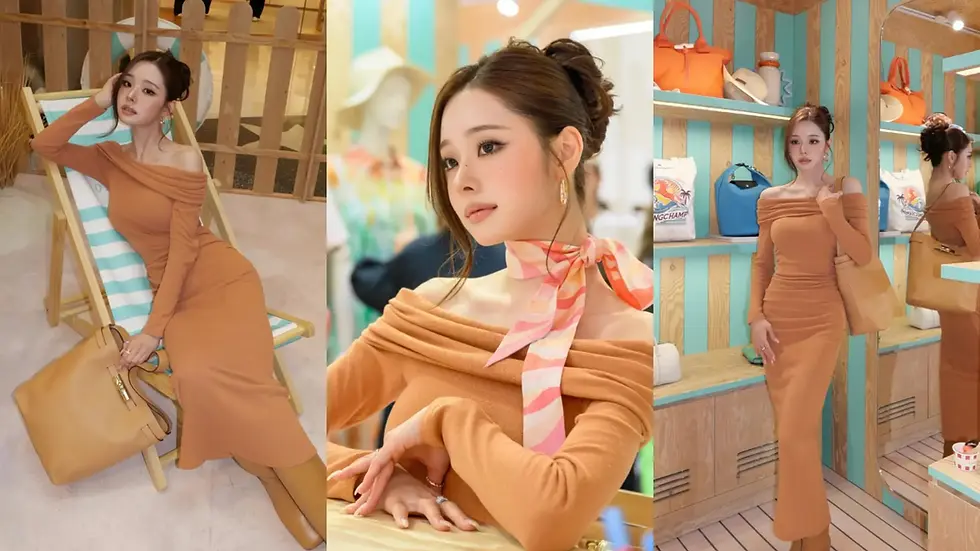
Song Ji-a — Free Zia — is still the reference point for luxury influence in Korea, and I put her first partly because her career contains the industry's most important cautionary tale and its most instructive comeback. She became a phenomenon off Single's Inferno Season 1 as the girl whose whole identity was luxury fashion.
Longchamp's recent work with her shows where it has landed. Her carousel coverage of the Longchamp SS26 pop-up event took 87K likes, with the comments overwhelmingly about how beautiful she looked.
She rebuilt slowly, kept the luxury register but with more distance and more polish, and today she's back to five million followers and steady international brand work.
CONCLUSION
Three patterns run through these eleven campaigns. The strongest results came when the brand bought a context the person already lives in — Dex in a hotel, Changha in an airport, a chef at a leather house's pop-up — rather than a pose next to a product.
Formats that generate real reaction beat formats that stage one: Prada's mystery box and Mina Sue Choi's mother-daughter shoot both produced comment sections a scripted campaign can't. And audience geography matters more than the follower number: the same 'Korean luxury influencer' label covers people whose reach is dense and domestic, and people whose reach is global and thin, and they solve completely different briefs.
None of that costs much to act on. It mostly costs asking one more question at the casting stage — who actually follows this person, what do they live inside, and why — which is the cheapest moment in the whole campaign to be careful.
Frequently Asked Questions
Why work with influencers instead of idols for luxury in Korea?
Idol reach is global and diluted; creators like Kim Goeun deliver an audience that’s almost entirely domestic and almost entirely the luxury target demographic. The day-to-day luxury conversation in Korea runs through these feeds — dense, local reach solves a different brief than global fame.
What kind of luxury content works in Korea in 2026?
Lived-in over staged: quiet styling over logos, discovery over announcement, the campaign shot in slide one and the unfiltered day after it. The strongest results came when the brand bought a context the person already lives in — Dex in a hotel, Jeon Changha in an airport, a chef at a leather house’s pop-up.
Why are reality-show alumni so valuable for luxury briefs?
Single’s Inferno travels remarkably well on Netflix, producing fandoms that are fresh, international, and dense in a way big lifestyle accounts can’t match. At this size — Kim Jeong-su sits at 230K — they’re arguably the most underpriced inventory in the Korean market.
Can a chef really front a luxury fashion brand?
Son Jong-won proved it. The only chef in Korea holding Michelin stars in two categories covered Mulberry’s pop-up, drew 45K likes, and got editorial pickup from Elle — a craftsmanship figure matched with a craftsmanship brand. Fine dining is also where Korean luxury spending is quietly moving.
Which campaign formats produced the strongest results?
Formats that generate real reaction rather than stage one: Prada’s mystery box gave Jihoon Kim genuine first-reaction material (422K views), and Mina Sue Choi’s mother-daughter SK-II shoot made “timeless beauty” visibly true. Series also beat one-offs — a sequence of posts reads as a preference, a single post reads as a booking.