
Business in Korea: Real Market Entry Stories
- Arthur S.

- Aug 22, 2025
- 8 min read
Updated: Feb 7

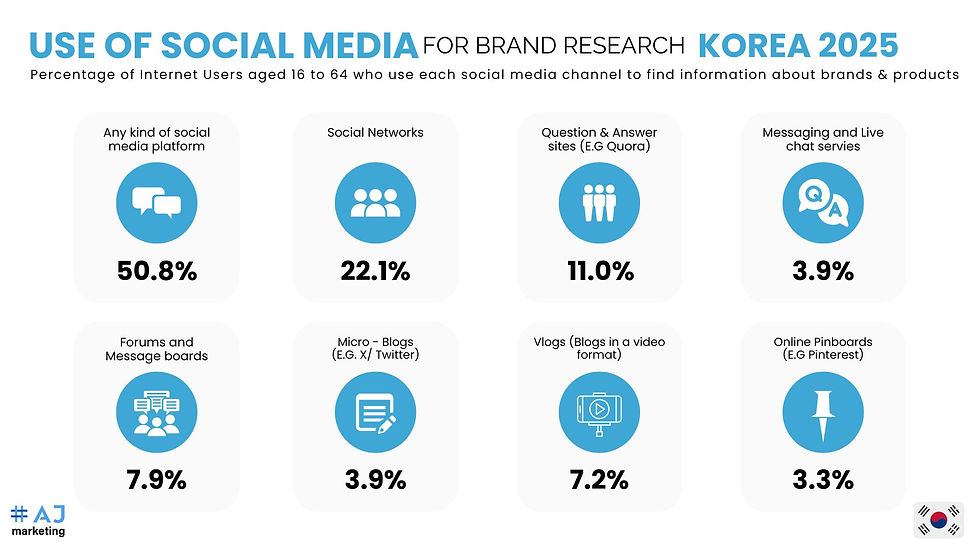
Imagine standing at the threshold of one of the most buzzing markets in Asia, ready to launch your dream venture—starting a business in Korea is exactly that thrill! Known for its cutting-edge technology and vibrant culture, Korea offers an incredible playground for entrepreneurs eager to make their mark. Here, consumers don’t just passively observe—they dive headfirst into engaging with brands, especially through social media. With a whopping 50.8% researching brands on social media, along with 22.1% tapping into social networks and another 7.2% enchanted by vlogs, it’s clear that digital engagement is the way to win hearts (Source: DataReportal).
But how do you navigate this fast-paced digital wonderland? This article is your guide! We’ll dive into inspiring stories of businesses that have successfully entered the Korean market, mastering cultural nuances, social media, and innovative strategies to captivate Korean audiences. Whether you’re a startup or an established brand, let these journeys fuel your ambitions and provide the insights you need to thrive in Korea’s dynamic marketplace.
5 Real Market Entry Successful Stories in Korea
Case 1 - The Korean Consumer Mindset: Lessons from Starbucks Korea
Case 3 - Google Korea: Navigating SEO and Search Trends in a Unique Market
Case 4 - Capturing the Luxury Market: Louis Vuitton's Appeal to South Korea's MZ Generation
Case 5 - Building Trust Through Localization: BMW’s Strategic Alignment with Korean Business Etiquette
Understanding the South Korean Market

Economic Overview
In 2025, South Korea's economy experienced modest growth with the GDP expanding 0.6% quarter-on-quarter in Q2, after a 0.2% contraction in Q1, supported by a 0.5% rise in private consumption and a 4.2% increase in exports driven by semiconductors and chemical products, while construction and equipment investments declined by 1.5% each; the trade surplus significantly expanded, nearly doubling year-on-year to $6.61 billion in July, aided by strong semiconductor exports (Trading Economics). Despite improved consumption, domestic demand remains constrained by high household debt, which has surged to 91% of GDP, and cautious consumer spending persists due to increased interest rates (AInvest).
Cultural Insights
Importance of Relationships in Business (Inhwa)
Inhwa, a principle rooted in Confucian values, plays a crucial role in South Korean business. This concept of “harmony” underscores the significance of hierarchical respect and loyalty in professional interactions. Unlike the transactional nature of some Western business cultures, South Korean business relies heavily on long-term, trust-based relationships. For foreign businesses, building inhwa is essential to establish credibility and gain favorable standing in the Korean market.
Understanding Local Consumer Behavior and Preferences
South Korean consumers are known for their preference for high-quality, innovative, and authentic brands. They value social responsibility and are heavily influenced by digital media, with many relying on online reviews and social platforms. Successfully entering this market requires a deep understanding of these values. For instance, brands that align with environmental sustainability or social causes tend to resonate well with local consumers. Tailoring your market entry strategy in South Korea to reflect these values can significantly enhance brand loyalty and engagement.
1. The Korean Consumer Mindset: Lessons from Starbucks Korea
Achieving Brand Success Through Business Etiquette in South Korea
Starbucks' success in South Korea stems from its keen respect for business in South Korea, aligning with local etiquette and values. By partnering with the Shinsegae Group, a respected Korean conglomerate, Starbucks gained vital local insights and trust, positioning itself as a premium lifestyle brand that meets Korea's high standards for quality and service. This strategic partnership has helped Starbucks grow to over 1,750 stores, making it South Korea’s most popular café brand and its fourth-largest market globally, even surpassing Starbucks Japan in 2022.
Tailoring Offerings to Reflect the South Korea Economy and Consumer Preferences

Starbucks has further capitalized on the robust South Korea economy by crafting a premium image that appeals to Korean consumers’ affinity for high-quality, exclusive experiences. Through localized menu items like Jeju-exclusive beverages and custom merchandise, such as collaborations with K-pop group Blackpink and products celebrating Korea’s National Liberation Day, Starbucks creates unique offerings that resonate with Korean culture. The introduction of the “Siren Order” app in 2014 also reflects Korea’s fast-paced, convenience-driven lifestyle, known as “ppalli-ppalli” culture, allowing customers to pre-order and skip wait times. These adaptations showcase Starbucks’ commitment to understanding and meeting Korean consumer expectations, which has driven consistent revenue growth for Starbucks Korea since its debut.
2. Netflix Korea: Adapting Content for a New Audience
Netflix's Strategic Growth in Korean Content Production
Step into the world of Netflix, where their love affair with Korean content is nothing short of epic. Over the years, from 2015 through 2023, Netflix has made a jaw-dropping investment of $1.7 billion to bring Korean series and films to screens both near and far. In 2023, Netflix announced an additional $2.5 billion investment over four years to further expand Korean content production, doubling its total investment in South Korea since 2016 to over $3 billion (Variety). Imagine, for 2023 alone, Netflix is rolling out over 30 fresh Korean titles—that’s more than they've ever released in a single year. This isn't just about numbers; it's a testament to how vital Korean stories have become in Netflix's global playbook. The magic of Korean originals like "Squid Game" and "All of Us Are Dead" hasn't just captivated audiences—they've built bridges, showcasing the universal pull of Korean narratives.
Expanding Local Partnerships and Production Facilities
Behind this tapestry of Korean content are strategic partnerships that Netflix has masterfully woven with local giants like CJ ENM's Studio Dragon and JTBC Content Hub. These collaborations have been pivotal, unlocking exclusive streaming rights and co-production opportunities that bring beloved Korean dramas to a broader audience. But Netflix's commitment doesn't stop at partnerships. They've established a physical foothold with leased production facilities near Seoul, featuring six stages in Paju and three in Yeoncheon-gun. This initiative isn't just about churning out content; it's a powerhouse move that’s boosting local employment while nurturing Korea’s media landscape. By focusing on culturally resonate, high-quality storytelling and expanding local production capabilities, Netflix is navigating South Korea's competitive streaming scene with finesse, fostering a creative ecosystem that’s as innovative as it is impactful.
3. Google Korea: Navigating SEO and Search Trends in a Unique Market
Google Korea: Navigating SEO and Search Trends in a Unique Market

Google has adapted its approach to business in South Korea by tailoring its SEO strategies to a unique market dominated by the local search engine Naver, holding about 62.8% of the market share. Meanwhile, Google holds around 31.4%, reflecting Naver's strong localization and ecosystem tailored to Korean users and Google's growing presence driven by younger audiences and AI integration (InterAd).
Leveraging South Korea's mobile-centric culture, Google Korea has focused on mobile optimization, prioritizing fast-loading, mobile-friendly pages that meet local expectations for speed and convenience. Additionally, Google targets industry-specific terms—particularly in technology and business—by optimizing Korean-language keywords and creating a user-friendly platform, thus appealing to local search habits and gaining traction in this competitive market.
Localizing Digital Marketing and Enhancing User Experience
Understanding that local relevance is critical in South Korea, Google has optimized content to reflect Korean culture and language nuances. This involves not only adapting keywords and SEO for direct Korean terms but also integrating Korean user habits into digital marketing strategies. For example, Google's content strategy now includes the seasonal and cultural search spikes associated with Korean holidays like Chuseok (Korean Thanksgiving) and Seollal (Lunar New Year). To further connect with users, Google Korea has also emphasized local business listings and integrated Google My Business with local apps to improve local SEO, competing more effectively with Naver's popular community features, such as Naver Blogs and Naver Cafes, which prioritize user-generated content and community interaction. This dual focus on cultural alignment and mobile-first optimization has helped Google become a viable alternative in the uniquely competitive South Korean search landscape.
4. Capturing the Luxury Market: Louis Vuitton's Appeal to South Korea's MZ Generation
Louis Vuitton’s Connection with South Korea’s MZ Generation and Cultural Influence
Louis Vuitton has successfully navigated the landscape of starting a business in Korea by appealing to the country's status-conscious MZ generation (Millennials and Gen Z) through culturally attuned, high-fashion marketing. Since opening its first Seoul store in 1991, Louis Vuitton has expanded significantly to around 29 locations across South Korea as of 2025. These include flagship stores in key areas such as Gangnam, Seoul, and major cities like Busan, Jeju, and Daegu. Catering to the MZ generation’s desire for luxury goods and status symbols, Louis Vuitton offers installment plans and other financial solutions, aligning with Korea's unique cultural and economic dynamics, where luxury spending per capita is among the highest globally.
Strategic Collaborations and Exclusive Experiences
To further appeal to South Korea’s luxury-focused youth, Louis Vuitton has collaborated with prominent South Korean cultural figures, including K-pop icons like BTS’s J-Hope and NewJeans’ Hyein, aligning the brand with South Korea’s Hallyu (K-wave) influence. Additionally, the brand has engaged audiences with unique events, such as its pre-fall 2023 show on the Jamsugyo Bridge over the Han River. This was not only Louis Vuitton’s first offline pre-fall show but also part of a tourism agreement with the Korea Tourism Organization to promote Seoul internationally. The campaign strategically highlights Louis Vuitton’s appeal in high-end experiences beyond fashion, extending into lifestyle with luxury pop-ups like its restaurant in collaboration with Michelin-star chef Cho Hee-Sook and partnerships with trendy cafes. These initiatives have deepened Louis Vuitton's cultural relevance in South Korea, supporting brand loyalty among an audience that values exclusive experiences.
5. Building Trust Through Localization: BMW’s Strategic Alignment with Korean Business Etiquette
Establishing Credibility Through Local Partnerships and Cultural Sensitivity

BMW’s success in South Korea owes much to its localized strategy, which respects South Korea's emphasis on long-term partnerships and quality service. By collaborating with top Korean companies like Samsung SDI and LG Chem for key automotive components, BMW has not only committed to the South Korean economy but also strengthened its credibility in a market that values trust and reliability. These partnerships allow BMW to leverage advanced technology and industry insights, aligning the brand with Korean expectations for premium service and quality.
Engaging Korean Consumers with Cultural Relevance and Innovation
Beyond strategic partnerships, BMW connects with Korea’s luxury-oriented and trend-savvy consumers through culturally relevant marketing. The launch of the BMW XM, featuring a campaign with K-pop star G-Dragon, is a prime example of BMW’s appeal to the MZ generation, which deeply values cultural relevance and exclusivity. Furthermore, BMW’s R&D Center in Cheongna supports local innovation in EV technology, ensuring that BMW’s offerings cater directly to Korean preferences, particularly in sustainable luxury. This mix of cultural engagement and technical localization has allowed BMW to secure a strong foothold in South Korea’s premium automotive market.
Conclusion
In South Korea's vibrant market, global brands have found success by blending innovation with cultural respect. Companies like Starbucks and BMW have thrived by honoring local values, understanding consumer habits, and crafting experiences that resonate deeply. Their stories highlight the importance of strategic partnerships and culturally attuned marketing. These lessons offer a roadmap for any business aiming to thrive in this dynamic economy, emphasizing the need to build meaningful connections and make your brand a cherished part of everyday life in one of Asia's most exciting markets.
Frequently Asked Questions (FAQs)
How can businesses adapt to South Korean consumer preferences?
Influencer marketing thrives in South Korea, especially via K-pop stars and influencers on Instagram and YouTube. Brands like BMW and Louis Vuitton leverage icons like G-Dragon and BTS to boost appeal and engage Millennials and Gen Z.
What are the challenges of entering the South Korean Market?
Challenges include navigating regulations, understanding business etiquette, and competing with established local brands. Partnerships with respected companies, like BMW’s collaborations with Samsung and LG, help build credibility and trust.
How can businesses build brand trust in the South Korean market?
Building trust means aligning with local quality standards through strategic partnerships. BMW’s work with Samsung SDI, for instance, shows commitment to Korean needs, fostering loyalty.
What are the most effective strategies for launching a luxury brand in Korea?
Successful luxury brands use exclusivity, influencer partnerships, and culturally relevant marketing. Louis Vuitton’s events and K-pop collaborations resonate with Koreans who value luxury and cultural alignment.
How do K-pop collaborations impact brand success in Korea?
K-pop collaborations boost brand visibility and credibility. Partnering with stars like BTS or G-Dragon taps into a massive fan base, increasing engagement and sales, especially among younger consumers.
